Thursday, May 31, 2012

I got this poem from a friend today, via email, and it sums up my life perfectly right now.  Thank you, Silver Queen, you know who you are.


Passage

by John Brehm
In all the woods that day I was
the only living thing
fretful, exhausted, or unsure.
Giant fir and spruce and cedar trees
that had stood their ground
three hundred years
stretched in sunlight calmly
unimpressed by whatever
it was that held me
hunched and tense above the stream,
biting my nails, calculating all
my impossibilities.
Nor did the water pause
to reflect or enter into
my considerations.
It found its way
over and around a crowd
of rocks in easy flourishes,
in laughing evasions and
shifts in direction.
Nothing could slow it down for long.
It even made a little song
out of all the things
that got in its way,
a music against the hard edges
of whatever might interrupt its going.
 
"Passage" by John Brehm, from
Help is on the Way. © The University
of Wisconsin Press, 2012.

Tuesday, April 10, 2012

Spring Break trip


This song was the soundtrack for our spring break trip to Germany.  I will (hopefully) post some photos and thoughts about the trip here.  But in the meantime, sit back, and enjoy the song. 

Thursday, March 29, 2012

Happy Easter, Peeple!

I just saw this on Buzzfeed:


I love me some Peeps!  Happy Easter, All!

Tuesday, March 20, 2012

Hope Springs Eternal

I just found this amazing art installation photo on BoingBoing.

Amazing, and inspiring.  Here is a quotation from the article:

“I walked through Bloom with a close friend of mine who has spent a great deal of time inside similar hospitals. He was close to tears and repeated said he felt the desire to jump into the flowers, sum bold for the freedom and the celebration of his own growth and healing. We recognized that Bloom brought beauty and wonder to what has always been an inherently taboo subject matter.”

“‘Never worry alone’ was a Dr. Tom Gutheil classic line, but because of the lack of social support, too many patients who came here had to worry alone. Anna saw these corridors as places to be filled with growth. For all the patients who never received flowers, these flowers are for you.”

You can see the original article here, with more beautiful photos.

Thursday, March 8, 2012

Shrines of Hope

This blog post is based on a recent talk I attended called which is part of a series at the University of Pennsylvania Health System, Department of Pastoral Care, Spirituality, Religion & Health Interest Group:

FAMILY SHRINES OF HOPE ON THE MEDICAL INTENSIVE CARE UNIT (MICU)
with John Hansen-Flaschen, MD, Professor of Medicine and Chief of the Division of Pulmonary, Allergy, and Critical Care at the Hospital of the University of Pennsylvania


ICU Family Shrines of Hope from John Hansen-Flaschen on Vimeo.


After playing the above video for us, Dr Hansen-Flaschen talked about his concept of working at the MICU as being on a tour of duty in a submarine.  He completely immerses himself in the world of the MICU during his two-week rotation.  The patients, family and staff of the MICU are all he thinks about.  Then he talked about the welcome appearance of the shrines that he shows in the video.  First, his definition.

Shrine: an assembly of specifically chosen items assembled for devotional or reverential purposes. There are both secular and religious shrines - that determination is best left to the viewer.

Shrines of Hope

These are not a commemoration of something that WAS, but hope for recovery or a peaceful passage to a better place.  Shrines in the ICU spring up on their own.  Not memorials but visual prayers of hope and redemption.

We experience life in MICU completely and profoundly specter of death brings focus and solemnity.  Families come and talk, think about the future, they're not "crying all the time."  They are up against the clock.  It's a time for reconciliation, healing old wounds, wrapping things up.

ICU = temple and submarine, rooms are chapels, nurses' station is the altar, MD's are high priests (? the speaker wonders) How do we reconcile the images of submarine and temple?

What makes a place sacred?  There are secular shrines.  MICU is a separate place, it's about the human condition: intensity and profundity.  It's not easy to be distracted in the MICU.

"I ask, 'Tell me about him/her'  - up to that point all the medical interactions have been about 'rescue.'  After this question, Tell me about her, then what comes out is a first draft of an obituary." - Dr.
H-F

From here, the talk became a discussion about what experiences of the MICU and/or shrines the audience members had, and how they reconcile the concepts of submarine and temple in the MICU.  The audience was diverse, made up of a lot of Chaplains. 


"MICU not always a sacred space, but sacred space is created by the people in it. "  - Chaplain
"The blessing of tasks to cope with the intensity." - Chaplain
"Nurses making shrines for patients without families that visit. That reduces "ICU Psychosis." - Chaplain
"Help with passing celebration of person.  Power of our attention to the person in the bed at the time of death." - Dr H-F
"MICU affirmation of life, love of family, stories of life, grieving has meaning because of richness of life." Chaplain
"Pieces of home make hospital room feel like home.  Hope for life, place  of home." - Chaplain

This talk gave me a LOT to think about.

Wednesday, March 7, 2012

Keep your eyes on the prize, hold on

BBC Bleak House, 2005 theme:


"We have a system of justice in [the US] that treats you much better if you're rich and guilty than if you're poor and innocent. Wealth, not culpability, shapes outcomes.” - Bryan Stevenson

I read that quote above, on BoingBoing and then listened to the whole "TED" talk. It's amazing how the past 24 hours have had so many connections and amazing little pieces that I think I'm going to have to break it all into two blog posts over two days! But, I read the link above today, after I read the Democracy Now piece on Christian Gomez, 27, who died at Corcoran State Prison after apparently participating in a hunger strike intended to highlight the terrible treatment of prisoners in Solitary.

"The use and abuse of solitary confinement in U.S. prisons is one of the most pressing domestic human rights issues in America today—and also one of the most invisible. The routine isolation of prisoners has grown dramatically in the past three decades, outpacing even the growth in the general prison population. Today, at least 25,000 prisoners are being held in long-term solitary in the nation’s “supermax” facilities. According to available data, the total number of prisoners living in solitary confinement in all prisons and jails exceeds 80,000." - Solitary Watch


[I think it's also crazy that a comedian is bringing this to our attention.]

Our prison population has exploded. And if you are an African American or Latino male, you are more likely to be incarcerated than anyone else. Once incarcerated, you may well lose your right to vote (in some states, permanently). And increasingly, you will be given the "choice" of working for a corporation to make things or staff phone banks for pennies an hour, OR go to solitary confinement. I don't think anyone really considers Solitary an option. The inequality of the system, that is so weighted against the poor and those with dark skin is truly terrifying.

Excluding low-scoring students from public schools gets scores up, but it expands the school-to-prison pipeline, which has quadrupled over the past thirty years, along with corrections costs, which now threaten to devour funds that should be spent on education. Most inmates are functionally illiterate and high school dropouts. In a devil’s bargain, the public spends as much as $50,000 a year to incarcerate young men on whom it would not spend $10,000 a year for a decent education. - The Nation

My long-time readers will know that I'll want to bring this discussion back to education, and so here I go. I'm willing to oblige. I recently began re-watching the 2005 BBC version of Bleak House, and if you haven't seen it yet, I recommend it! I see so many parallels between Dickens' time and ours. The rich have rigged the system, and the poor are doing the best they can do make some kind of living out of their lots. All Dickens' characters are flawed but they feel "true to life." The "moral of the story" comes shining through too. We are all just as sick as our secrets - just because we have the power and wealth to make something happen, doesn't mean we should.

Bleak House is one of Charles Dickens' most brilliant novels, arguably the greatest ever depiction of Victorian London -- from its splendid heights to its most wretched depths. Bleak House features some of the most famous plot twists in literary history, including a case of human spontaneous combustion and an infamous inheritance dispute that is tied up for generations in the dysfunctional English courts.

An epic feast of characters and storylines, Bleak House is Dickens' passionate indictment of the convoluted legal system that is as searingly relevant today as it was in the mid-19th century. The court of Chancery becomes the center of a tangle of relationships at all levels of society and a metaphor for the decay and corruption at the heart of Victorian England. - PBS.org
I'm taking heart from the fact that we moved away from the "Dickensian" treatment of people, but then, when I realize we have fallen back in the same traps, I lose hope! I suppose what helps me to keep moving forward is to know that I have read and heard the stories of these people in Solitary, that I can try to help get the word out about these people, and "be a witness" to their plight.

Shine a bright light in the dark places. The truth is stranger than fiction, and maybe Knowledge really is Power. I'm full of the cliches today. But I don't know how else to move forward with any kind of hope. "Keep your eyes on the prize, hold on."

Friday, March 2, 2012

Cockadoodle-doo!!!

PISCES (Feb. 19-March 20):

You should be like a rooster, Pisces: dispensing wake-up calls on a regular basis. You should be nudging people to shed their torpor and shake themselves out of their stupor. What's your personal version of "Cockadoodle-doo!"? It shouldn't be something generic like "Open your eyes!" or "Stop making excuses!" Come up with attention-grabbing exclamations or signature phrases that no intelligent person can possibly ignore or feel defensive about. For example: "Let's leap into the vortex and scramble our trances!"?

I still Love Rob Brezsny after all these years. I'll leave you with the video for 'Feel It All Around' by Washed Out. Portlandia fans will recognize it. Happy Day, all.

Seize the Moment!


Tuesday, February 28, 2012

"I was in prison and you came to me"

Ever since I read this in the New York Times Magazine, two weeks ago, I have not been able to get it out of my mind:
One evening we were sitting in Highsmith’s basement apartment when the phone rang. It was Alphonso Prater, another interrupter. The two had a reunion of sorts when they joined CeaseFire; they shared a cell in the county jail 34 years ago. Prater’s voice is so raspy it sounds as if he has gravel in his throat. He told me that he became permanently hoarse after a long stint in segregation in prison; he had to shout to talk with others.
Imagine needing to talk with other humans so badly that your voice is wrecked for life. "Segregation" sounds at once so sanitized (instead of "solitary confinement"), and at the same time so historical (racial segregation), that it doesn't quite fit. But I get what it means. This man felt so alone and did whatever he could to make contact with others, to stay sane.

I got to the NYT Magazine article via the PBS site about their AMAZING documentary, The Interrupters. I recommend this movie very highly.

As my long-time readers will know, I became radicalized a few years ago by an interview on Fresh Air with Dr William Schwab about gun violence in Philadelphia. I felt like I had to do SOMETHING, and I started on a path.

I was already political, but I am trying to turn the anguish that I feel when I hear these stories into some kind of action, instead of ignoring it. There is a good link here on the Interrupters site about How we ignore the long-term effects of violence on children, adults and our communities.


I think part of the action, sometimes, is as simple (not easy) as telling or hearing the story. In another part of the Interrupters site, there is a display of the shrines for the deceased. I am always attracted to the shrines because of all the religious art and symbolism that is there - funerary art styles endure through time - and these shrines tell stories. We can hear the voices:

The interactive shrine sequence was the brainchild of the film’s outreach coordinator Anton Seals, who grew up in the south side of Chicago. ”I was thinking about all of the different friends I’d lost over the 38 years of my life,” he said. “People usually forget that these people had lives, that they’re humans, not just victims.” He sees the project as an opportunity to give people an outlet for self-expression, and to perhaps even spur them to action, such as learning more about violence or organizing politically.

Maybe the best way for me to help, to Do Something, is to LISTEN to the stories, HEAR the voices. The people enduring this violence and pain are humans suffering "...they're humans, not just victims." This helps keeps me focused on what I can DO:

For I was hungry and you gave me food, I was thirsty and you gave me drink, I was a stranger and you welcomed me, I was naked and you clothed me, I was sick and you visited me, I was in prison and you came to me.’ Then the righteous will answer him, saying, ‘Lord, when did we see you hungry and feed you, or thirsty and give you drink? And when did we see you a stranger and welcome you, or naked and clothe you? And when did we see you sick or in prison and visit you?’ 'The King will reply, ‘Truly I tell you, whatever you did for one of the least of these brothers and sisters of mine, you did for me.’ Matthew 25:35-46
Is it enough? I don't know. But if feels less overwhelming if I think of the concrete actions I can take, and stay "right sized." I can welcome a stranger, and I can hear their story. That is how I can seize the moment, today.

Wednesday, February 22, 2012

Lent 2012

Update on my Lenten plan:

I am going to try a "Facebook Fast." We'll see if I can do it. So far, in the early hours of Lent, I've upped my Twitter reading.

As my first reflection on my Lenten prompt, "What prevents you from seizing the moment?" I've been thinking about distractions. I've been noticing for the past few months that my own mental distractions get in the way of really focusing on the important stuff: being present in the moment.

That was part of what clicked for me late yesterday afternoon, while I was perusing Facebook. I was distracting myself with political argy-bargy. And what that does is it makes me tired. It makes me not want to fight against what I see as oppression-in-the-making. In this case it makes me feel helpless. Which I am not. And that's what saps my ability to seize the day: the feeling of helplessness.

It was this story that pushed me over the edge, about the IN state rep who wanted to denounce the Girl Scouts of America (who are celebrating their 100 year anniversary in 2012). [my emphasis where added below]

In his e-mail, Morris said he had done "a small amount of web-based research" and had concluded the Girl Scouts was linked to Planned Parenthoodsomething both the Girl Scouts and Planned Parenthood deny.

Morris said that liberal Girl Scout leaders "indoctrinate" girls with Planned Parenthood principles and that the Scouts tout 50 role models, all but three of whom he said are "feminists, lesbians or Communists."

....And when time came for the House to adjourn, he [rep Bosma, who supports the Girl Scouts] asked all lawmakers who had been Girl Scouts — and seemingly every female legislator stood — to give the daily motion to adjourn.

As he left the House, Bosma was dismissive of the controversy: "I've been to the carnival before, and you don't walk in to every sideshow tent."

Do you see a connection there? Girl Scouts is a benevolent service organization whose primary focus is on helping girls to achieve their maximum potential, to become the best* citizens and contributors to society that they can possibly be. Is it any wonder that the women leaders in our country were girl scouts? Is there a problem with women being leaders???? I was a Girl Scout, my daughters are involved in Girl Scouts, and will not be distracted by this sideshow (despite the length of this post which may prove otherwise!).

I have maintained my Facebook Fast for a few hours, and hope to continue it! We'll see what I am able to accomplish during the time I would have spent there.


* The Girl Scout Law

I will do my best to be
honest and fair,
friendly and helpful,
considerate and caring,
courageous and strong, and
responsible for what I say and do,
and to
respect myself and others,
respect authority,
use resources wisely,
make the world a better place, and
be a sister to every Girl Scout.

Tuesday, February 21, 2012

Happy Mardi Gras - Lent Starts Tomorrow


Happy Mardi Gras, All! "Laissez les Bon Temps Rouler!"

It's that time of year again, Lent starts tomorrow. As wikipedia says,
There are traditionally forty days in Lent which are marked by fasting, both from foods and festivities, and by other acts of penance. The three traditional practices to be taken up with renewed vigour during Lent are prayer (justice towards God), fasting (justice towards self), and almsgiving (justice towards neighbour). Today, some people give up a vice of theirs, add something that will bring them closer to God, and often give the time or money spent doing that to charitable purposes or organizations.


This year, these are the things I plan to incorporate into my Lenten Practice:

I plan to work on art projects. I have started an "icon" that I need to finish, so maybe this Lent is the time to do it. I have decided that when I get inspired to do an icon, or other piece of religious art, I should DO IT. And not be afraid of trying. [If I actually complete something I will be sure to post it here!]

During Lent two years ago, I tried an idea featured on SoulPancake: to create a piece of art that reflected something I was grappling with. You can see the result here! I had No Idea back then how prescient that experience would be. And it has changed my life. [No exaggeration!]

So, I'm going back to the same well again this Lent, and I'm going to try this prompt, "What prevents you from seizing the moment?" I don't plan to blog about this every day of Lent (Heaven Forfend!), but I'm going to try to make a practice of looking at it.

I may also try to work my way through the Psalms again, though I will be participating in a Lenten Bible study at my church, so maybe that's enough Bible for me. :) Link
Our Sunday School class is going to make sandwiches for our weekend Soup Kitchen to give to the homeless during Lent.

I am also going to put aside some money each week to help a new friend fund her service work in Southern Sudan. She is a nurse who will be helping out in a rural clinic, providing basic health care.

It looks like a lot when I write it out like that! May you have a Happy Mardi Gras, and an inspirational Lent.

Wednesday, February 15, 2012

5 Years of Blogging!

Hi Everybody! Today marks the 5th anniversary of this blog. AMAZING!

It's hard to believe. I feel like I have less and less time to blog, but I still love this thing, and it helps me to keep posting.

Thank you for reading, I appreciate it very much.

Love!

Monday, January 30, 2012


I just got the link for this beautiful audio essay/interview with my beekeeper. It takes 15 minutes or so to listen to the whole thing, which I encourage you to do.


It's about beekeeping and mysticism and "hearing God" as much as we humans are able to understand all that. I hope you enjoy it as much as I do.

Thursday, January 12, 2012

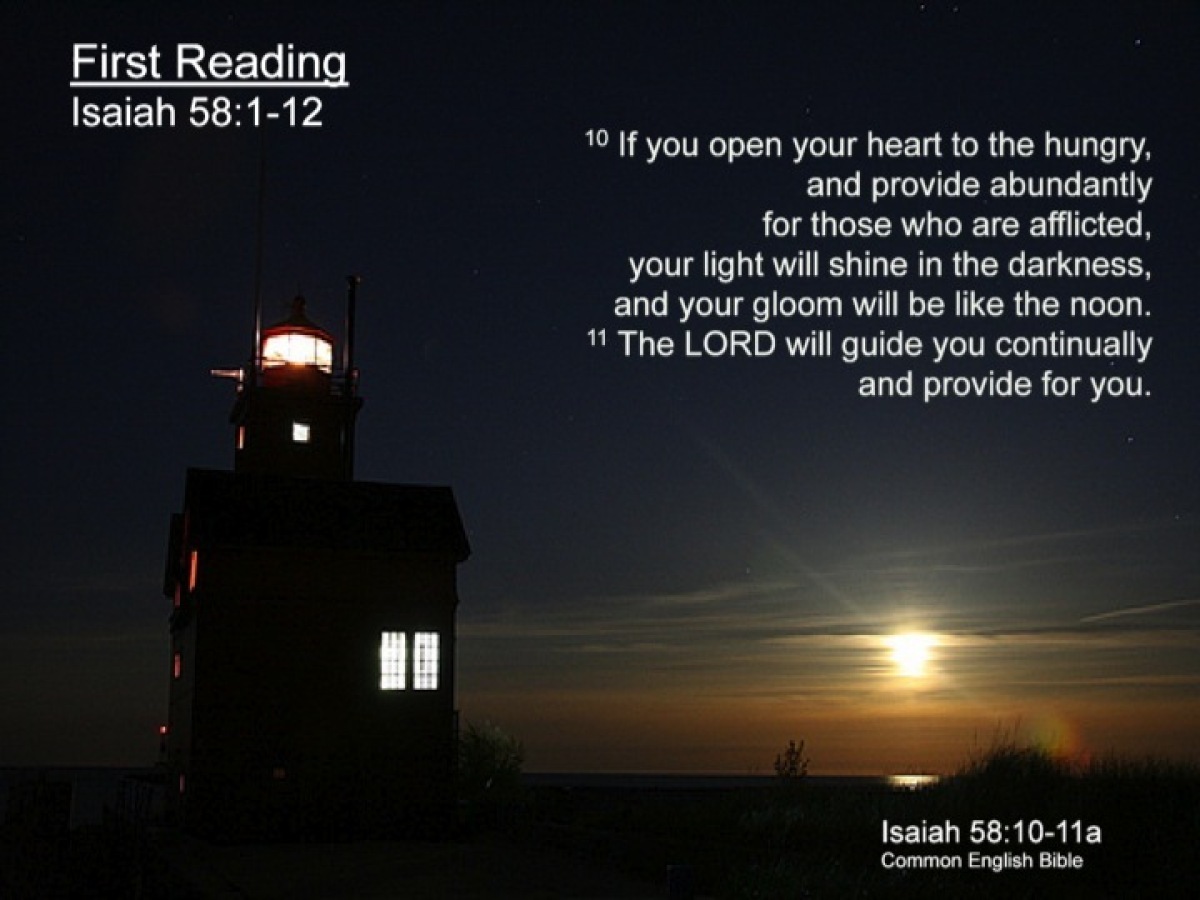
The Night Sky, Darkness continued....


Look at these beautiful new images of the night sky! Amazing. When the night is dark enough, look how clear the stars are! [images from the BBC]

I've been meaning to post this Psalm that I've been reading every night for the past few months, and it feels appropriate right now:

Psalm 139

1O Lord, you have searched me and known me.

2You know when I sit down and when I rise up; you discern my thoughts from far away.

3You search out my path and my lying down, and are acquainted with all my ways.

4Even before a word is on my tongue, O Lord, you know it completely.

5You hem me in, behind and before, and lay your hand upon me.

6Such knowledge is too wonderful for me; it is so high that I cannot attain it.

7Where can I go from your spirit? Or where can I flee from your presence?

8If I ascend to heaven, you are there; if I make my bed in Sheol, you are there.

9If I take the wings of the morning and settle at the farthest limits of the sea,

10even there your hand shall lead me, and your right hand shall hold me fast.

11If I say, “Surely the darkness shall cover me, and the light around me become night,”

12even the darkness is not dark to you; the night is as bright as the day, for darkness is as light to you.

13For it was you who formed my inward parts; you knit me together in my mother’s womb.

14I praise you, for I am fearfully and wonderfully made. Wonderful are your works; that I know very well.

15My frame was not hidden from you, when I was being made in secret, intricately woven in the depths of the earth.

16Your eyes beheld my unformed substance. In your book were written all the days that were formed for me, when none of them as yet existed.

17How weighty to me are your thoughts, O God! How vast is the sum of them!

18I try to count them—they are more than the sand; I come to the end—I am still with you.


Wednesday, January 11, 2012

Darkness

Darkness is a topic that has come up a lot recently in my thoughts, and in my conversations with my dear friend Lakshmi. For a long time I have adopted the Quaker saying, "I'll hold you in the Light" as a way to say that I am keeping someone in my prayers, and it feels like a less religious way to say, "I'll pray for you." Part of my theology is that each of has "the Light of G!d" within us. It may not always be easy to see, but it is there.


But what about the Dark? Nighttime is dark, it's when we rest, it's cooler, and sometimes scary. But the Dark can be restorative. I realized when recently watching "Cave of Forgotten Dreams" [which I HIGHLY recommend!!!] that the dark takes getting used to, and ideas emerge from the Dark.

I like the idea of coming to be able to see in the Dark at first, it is scary because our primary sense is "obscured" we can't see properly, but we begin to use and notice our other senses we have to calm down and be still and slowly acclimate to the Dark and often, if we are still long enough, we can see, even if it's just shapes, or we feel our way and we make it through it doesn't have to be terrifying. A lot of times we talk about “being in a dark place” when we are going through a difficult time, full of pain. Pain hurts, but it is not bad in and of itself: it helps us to get somewhere new, or learn something, and change often involves pain.

My friend Lakshmi clarifies by saying,

“there is a difference emotionally, experientially, between the darkness that descends while we are on a path: it is confusing, sometimes painful, disorienting; and the darkness of a restorative place (like a dim cathedral or a cave or the womb or the black soil of the earth), one chooses the cave, one does not choose a hard and obscured path (usually).

me: But there is still something deeply worthwhile about each experience, and the darkness isn't necessarily bad - the light and the dark, the good and the bad all of it makes us who we are today.

Lakshmi: I think our culture regularly confuses the difficult darkness with the restorative darkness and that is problematic. Also, as you are saying, there comes a way to see the difficult times as descents into the cave: challenging, fearful, harrowing even. Yet afterward, you come back with new knowledge, strength, skills. There is a way in which the difficulties can be transformed into restoration. In addition, I believe that the more you consciously, intentionally engage with/seek out/explore the dark, the less shocking and difficult it is when you come into a dark section of your life's path. You've gained skills in "seeing in the dark" as you say, you spend less time fighting the darkness and more quickly transform it to a time of contemplation and reflection, rebirth, gestation. This is why the dark goddesses: Kali, Hecate, Persephone, are so important: because they know how to dance in the dark. They know the path. It's kind of "nothing to fear but fear itself." It's our very fear and dislike of the dark that makes the process so hard.